
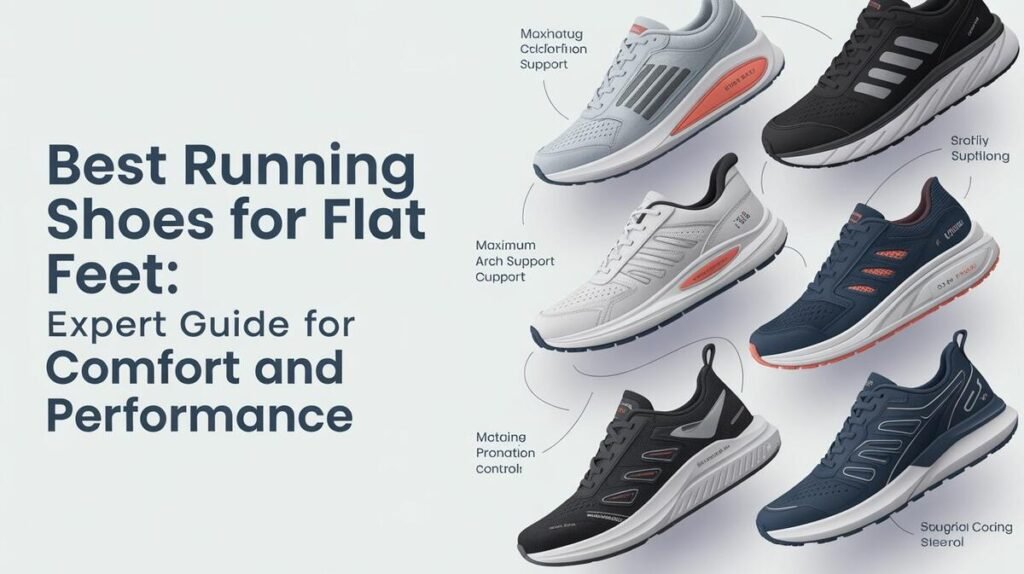
Running with flat feet can be challenging, especially if you don’t wear the right footwear. Also known as Pes planus, flat feet occur when your arches don’t develop properly or lose their shape over time. This condition often leads to overpronation, where the foot rolls inward excessively during running.
Because of this biomechanical issue, runners with flat feet may experience discomfort, instability, and a higher risk of injuries. Choosing the best running shoes for flat feet is essential for maintaining proper alignment, improving stability, and preventing pain during workouts.
In this expert guide, we’ll explore why flat feet require specialized running shoes, what features to look for, and the best types of shoes that support runners with low arches.
Why Runners With Flat Feet Need Special Running Shoes
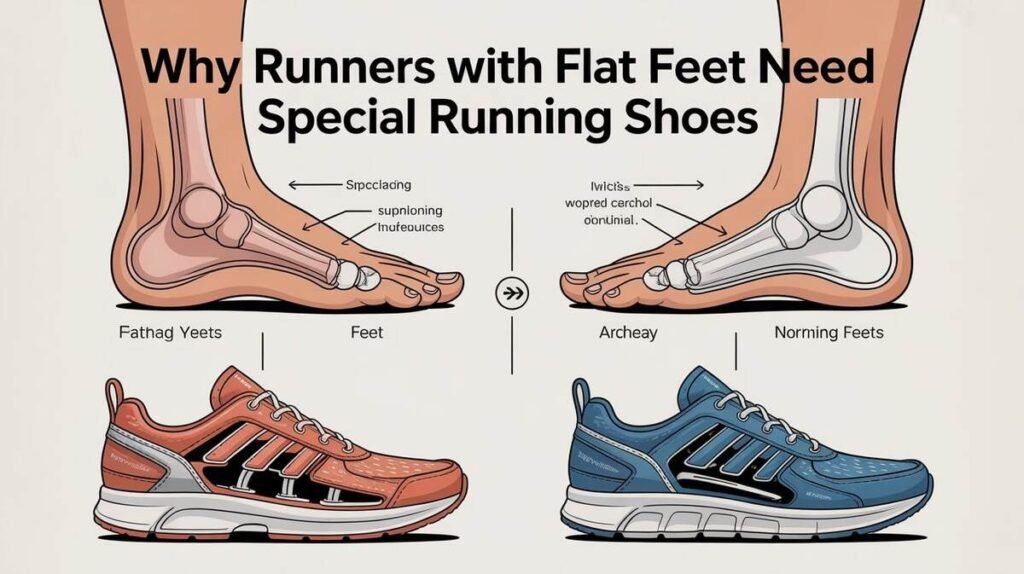
People with flat feet experience a different foot motion compared to those with normal arches. Without proper arch support and stability, the feet may roll inward excessively, putting extra pressure on the ankles, knees, and hips.
The right running shoes help stabilize the foot, improve alignment, and reduce stress on muscles and joints. Proper footwear also enhances performance and comfort during long-distance runs.
Improved Arch Support
Running shoes designed for flat feet provide structured arch support that compensates for the lack of a natural arch. This helps distribute body weight evenly across the foot.
Better Stability and Motion Control
Stability shoes prevent excessive inward rolling of the foot, reducing the risk of injuries linked with overpronation.
Reduced Risk of Running Injuries
Without supportive footwear, runners with flat feet are more likely to develop conditions such as Plantar fasciitis or Shin splints.
Proper running shoes minimize impact stress and improve overall biomechanics.
Enhanced Comfort During Long Runs
High-quality cushioning and support allow runners with flat feet to train longer without experiencing foot fatigue or discomfort.
Structural Essentials: Choosing the Right Support for Flat Feet
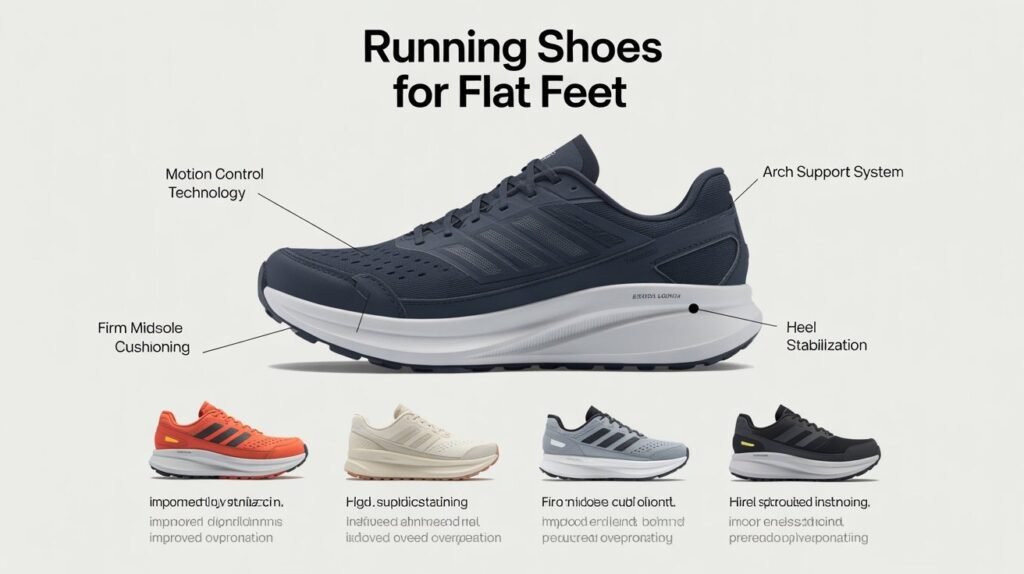
Before choosing a running shoe, it’s important to understand which features support runners with low arches.
Stability Technology
These shoes have built-in support to help stop your foot from collapsing inward as you hit the pavement.
Firm Arch Support
Shoes with strong arch support help maintain proper foot alignment and reduce strain on the Plantar fascia.
Cushioned Midsole
A well-cushioned midsole absorbs impact forces generated while running, protecting joints and muscles.
Wide Base and Heel Support
Flat-footed runners benefit from shoes with wider bases and strong heel counters, which improve balance and stability.
The Best Shoe Styles for Low Arches
Different shoe categories offer unique benefits for runners with flat feet. Understanding these categories helps you select the best option for your needs.
Stability Running Shoes
Stability shoes are the most common choice for runners with flat feet.
Moderate Arch Support
These shoes offer solid arch support while remaining flexible.
Balanced Cushioning
Stability shoes combine cushioning and support, making them suitable for daily running.
Ideal for Mild to Moderate Overpronation
They are particularly effective for runners whose feet roll inward slightly during movement.
Motion Control Running Shoes
Motion control shoes offer the highest level of support and structure.
Maximum Stability
These shoes include reinforced midsoles that significantly limit inward foot movement.
Strong Heel Counter
A rigid heel structure helps keep the foot properly aligned.
Best for Severe Overpronation
Runners with very flat feet benefit the most from motion control shoes.
Cushioned Running Shoes With Arch Support
Some runners with flat feet prefer softer cushioning combined with moderate support.
Shock Absorption
Extra cushioning reduces stress on joints during long-distance running.
Comfortable Long-Distance Runs
These shoes are suitable for runners who prioritize comfort and endurance.
Reduced Impact Stress
Better shock absorption protects the knees and ankles from repetitive impact.
How to Find Your Match: Running Shoes for Flat Feet
Selecting the right running shoe requires considering several personal factors.
Check Your Pronation Type
Flat feet usually cause overpronation, but the severity varies from person to person.
Test Arch Support
Try shoes with strong arch support to determine which level feels most comfortable during movement.
Look for Durable Midsole Materials
High-quality midsoles maintain their structure longer and provide consistent support.
Prioritize Fit and Comfort
The shoe should fit snugly without being tight, allowing natural toe movement.
Common Mistakes Flat-Footed Runners Should Avoid
Even experienced runners sometimes choose the wrong footwear.
Wearing Neutral Shoes Without Support
Neutral running shoes often lack the stability needed for flat feet.
Ignoring Shoe Replacement
Running shoes lose their cushioning and support after extended use.
Choosing Style Over Function
While appearance matters, support and stability should always be the top priority.
People Also Ask (FAQs)
Are running shoes with arch support good for flat feet?
Yes. Running shoes with strong arch support help stabilize the foot, reduce overpronation, and improve overall running comfort.
Can people with flat feet run safely?
Absolutely. With proper footwear and gradual training, runners with flat feet can run safely and effectively.
What type of running shoe is best for flat feet?
Stability or motion control shoes are generally the best options because they provide the necessary support and alignment.
Do flat feet require orthotics?
Some runners benefit from custom orthotics, especially if they experience chronic foot pain or severe overpronation.
Final Thoughts (Expert Advice)
Flat feet should not stop anyone from enjoying running. With the right footwear, runners can maintain comfort, stability, and performance while reducing the risk of injuries.
When choosing the best running shoes for flat feet, focus on arch support, stability technology, and proper cushioning. Investing in high-quality shoes that match your foot structure will significantly improve your running experience.
Always remember that the best running shoe is the one that supports your natural movement, fits comfortably, and helps you run pain-free for the long term.