You don’t need a squat rack to build serious leg strength. A single kettlebell leg workout, some floor space, and the right exercises can train your quads, hamstrings, glutes, and calves just as effectively as a full gym setup.
Kettlebells won’t match a barbell’s max loading potential, but that’s not really the point. Their off-balance, compound nature forces your stabilizing muscles to work harder, which builds strength, coordination, and control all at once, not just size. This guide covers the best kettlebell leg exercises, a ready-to-follow 30-minute routine, and the sets, reps, and weight guidance you need to actually see results.
Why Kettlebells Work So Well for Legs
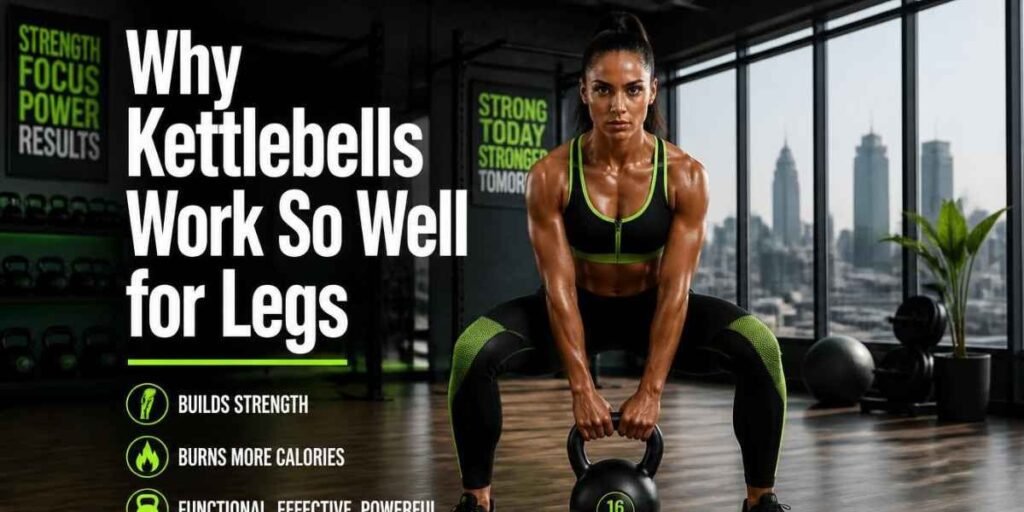
Kettlebell leg training combines strength work with cardio in a single movement. Exercises like swings elevate your heart rate while hammering your posterior chain glutes, hamstrings, and lower back at the same time.
Because most kettlebell moves are unilateral or off-centered, your calves, core, and hip stabilizers get pulled into nearly every rep. That’s muscle activation a machine or barbell often can’t replicate.The result is functional strength, the kind that carries over into running, climbing stairs, or catching your balance, not just numbers on a bar.
Also Read : HIIT Home Workout Printable: Your Complete Zero-Gear Training Blueprint
The Best Kettlebell Leg Exercises

1. Kettlebell Goblet Squat
Muscles worked: Quads, glutes, core
Hold the kettlebell by the horns close to your chest, elbows pointing down. Keep your chest up, brace your core, and squat until your thighs are parallel or slightly below. Push through your heels to stand.
Holding the weight in front encourages good squat mechanics and an upright torso, which is exactly why it’s the go-to starting point for beginners.
2. Kettlebell Deadlift
Muscles worked: Hamstrings, glutes, erector spinae, core
Stand with feet hip-width apart, kettlebell between your feet. Push your hips back with a neutral spine, grip the kettlebell firmly, then drive through your heels to stand tall.
Think “hips back first” rather than bending at the waist — that single cue protects your lower back through the entire set.
3. Kettlebell Reverse Lunge
Muscles worked: Glutes, quads, hamstrings, core
Hold the kettlebell at your chest or in a front rack position. Step one leg back into a lunge, lower with control, then drive through your front heel to return to standing.
Stepping backward instead of forward reduces stress on the front knee while still loading the glutes and quads hard.
4. Kettlebell Bulgarian Split Squat
Muscles worked: Quads, glutes, hamstrings
Rest your back foot on a bench behind you, kettlebell held at your chest. Lower your back knee toward the floor, keeping your front shin close to vertical, then push back up.
This single-leg move is brutal for correcting left-right imbalances most standard squats never touch.
5. Kettlebell Sumo Squat
Muscles worked: Inner thighs, glutes, quads
Stand with feet wider than shoulder-width, toes turned out slightly. Hold the kettlebell at chest height by the horns. Squat down, then push through your heels to return to standing.
The wider stance shifts more emphasis onto your adductors and glutes — muscles a regular squat often leaves undertrained.
6. Kettlebell Side Lunge (Lateral Lunge)
Muscles worked: Inner thighs, glutes, quads
Hold the kettlebell at your chest. Lateral movement is something most leg days skip entirely, which makes this a smart addition for knee stability and frontal-plane strength.
7. Kettlebell Pistol Squat (Assisted)
Muscles worked: Quads, glutes, core, hip flexors
Hold the kettlebell at chest height for counterbalance. Extend one leg forward and squat slowly on the other, using a bench for partial range if needed. Press through your heel to stand.
Prioritize control over depth here — this is one of the most advanced moves on the list, and rushing the range of motion is where most people get hurt.
8. Kettlebell Staggered Stance RDL
Muscles worked: Hamstrings, glutes, calves, core
Stagger your feet, with most of your weight on the front leg. Hinge forward with a slight bend in your front knee, letting the back leg lift slightly for balance. Return to standing with control.
This variation is a great middle step between a two-legged deadlift and a full single-leg RDL.
9. Kettlebell Heel-Elevated Glute Bridge
Muscles worked: Glutes, hamstrings
Lie on your back with heels on a low platform, kettlebell resting on your hips. Drive through your heels to lift your hips, squeezing your glutes at the top, then lower with control.
Elevating the heels increases the range of motion at the hip, which means a deeper glute contraction on every rep.
10. Kettlebell Calf Raises
Muscles worked: Calves
Hold the kettlebell at your side or in a goblet position. Calves recover fast, so don’t be afraid to push these toward higher reps 15 to 20 per set is a reasonable target once your form is solid.
Your 30-Minute Kettlebell Leg Workout
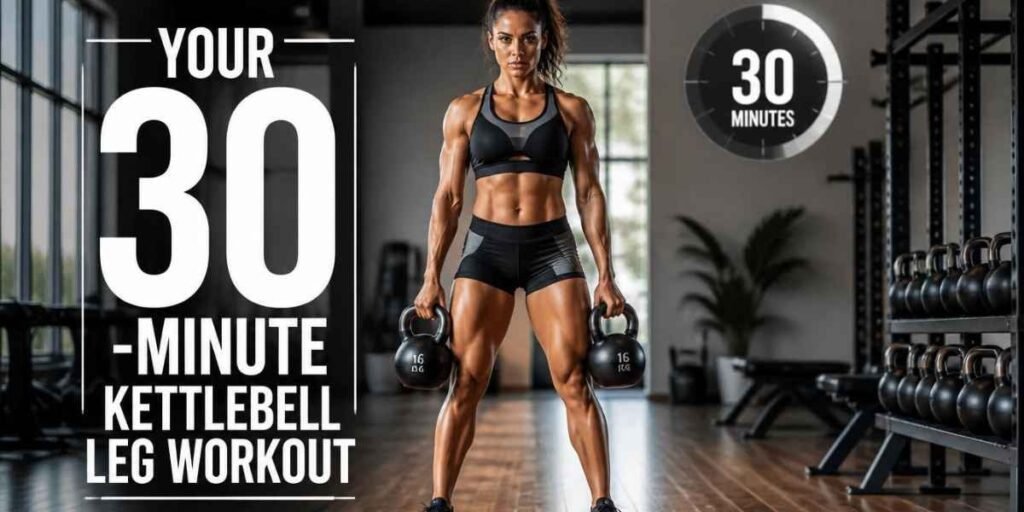
Pick 6–8 of the exercises above and build them into this structure:
Perform each exercise for 3 sets of 8–12 reps, resting 45–60 seconds between sets. Move through all exercises for one full round before repeating, or complete all sets of one move before moving to the next both work, so pick whichever keeps your form sharpest.
Spend 5–10 minutes warming up first. Bodyweight squats, leg swings, and hip circles are enough to prep your joints without wearing you out before the real work starts.
How to Choose the Right Kettlebell Weight
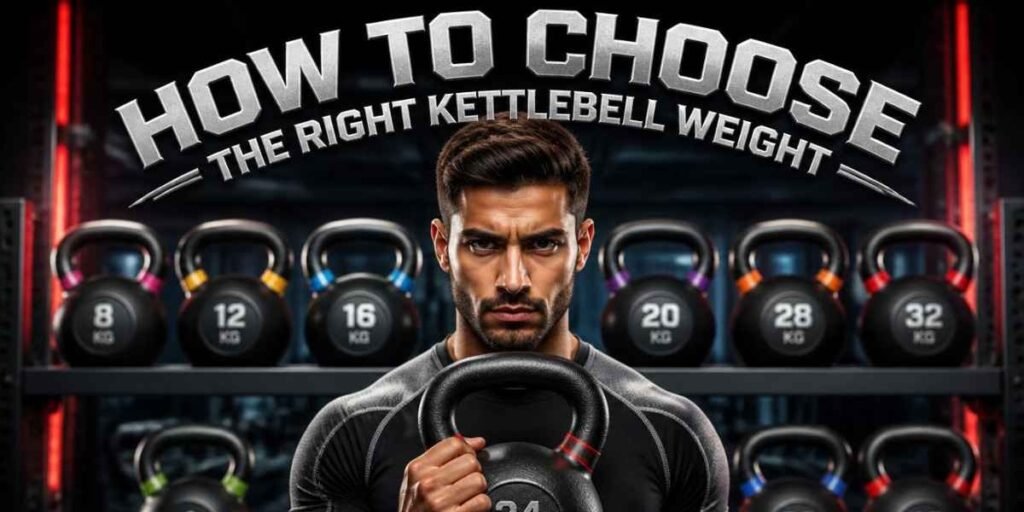
If your goal is muscle growth, aim for a weight that challenges you in the 8–12 rep range without breaking form. For glutes and quads specifically, go heavier when the movement allows it.
For balance-heavy moves like pistol squats or side lunges, prioritize control over load a lighter kettlebell with clean form beats a heavy one with wobbly reps every time.
As a rough starting point, many men begin around 12–16 kg and many women around 8–12 kg, adjusting from there based on experience and the specific exercise.
How Often Should You Train Legs with Kettlebells?
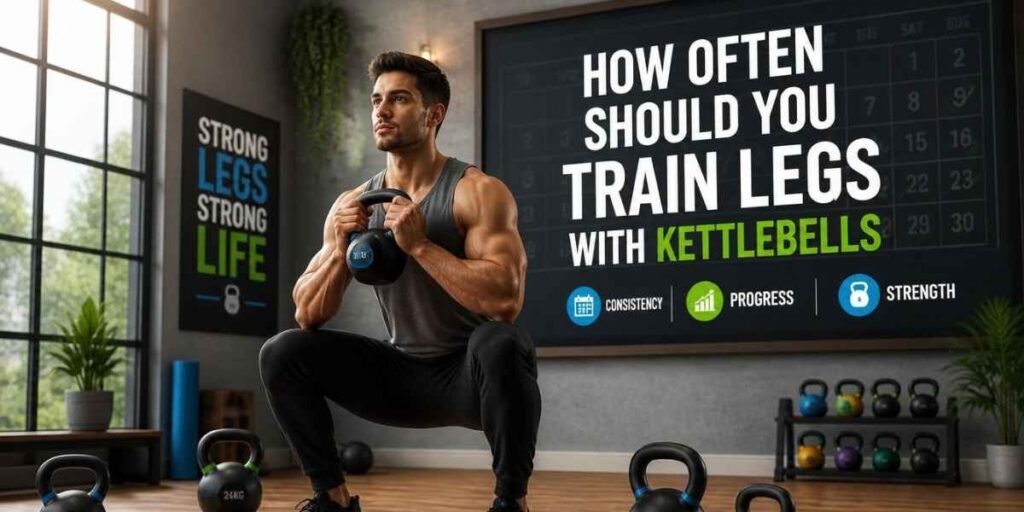
Two to three times per week is the sweet spot for most people, with at least 48 hours of recovery between intense sessions. This gives your muscles time to repair while still building strength consistently.
If you’re combining kettlebell leg days with other training, keep an eye on total weekly volume so your lower body isn’t getting hammered from multiple directions without enough rest.
Common Mistakes to Avoid kettlebell leg workout

Rounding your back during deadlifts and RDLs is the most common and most costly mistake. Keep your spine neutral and let your hips do the work, not your lower back.
Rushing depth on single-leg moves like pistol squats or Bulgarian split squats is another. Control matters more than range of motion until your balance and strength catch up.
Finally, using momentum instead of muscle on swings turns a great posterior-chain exercise into a lower-back risk. The power should come entirely from your hips snapping forward, not your arms hauling the weight up.
Final Thoughts kettlebell leg workout
You genuinely don’t need a full gym to build strong, functional legs; one kettlebell and a handful of the right moves will get you there. Goblet squats, deadlifts, and lunges cover the fundamentals, while lateral and single-leg variations fill in the gaps a barbell routine often misses.
Start with 6–8 exercises, keep your form tight, and give your legs 48 hours to recover between sessions. Progress the weight or the reps gradually, and this simple setup can carry a serious leg-day program for years.
FAQ
What muscles does a kettlebell leg workout target?
A kettlebell leg workout primarily targets the quads, hamstrings, glutes, and calves, with the core and stabilizing muscles activated on nearly every move.
Can kettlebell workouts replace leg day?
Yes, kettlebells can build equal or greater strength than machines when used with proper form and progressive overload.