Why do my legs ache at night without exercise? Waking up with aching legs is confusing when you haven’t done anything to explain it. No workout, no long walk, no obvious strain, and yet the ache shows up anyway, usually right when you’re trying to sleep.
The truth is, nighttime leg aches rarely need a workout to trigger them. Lying still changes how blood moves through your legs, which is exactly when several common conditions tend to flare up. This guide walks through the most likely causes, what makes each one feel different, and when it’s time to get it checked out.
Why Legs Ache More at Night, Even Without Activity

Why do my legs ache at night without exercise? Blood pressure and circulation naturally slow down while you rest. For most people, this goes unnoticed but if you have an underlying vein, artery, or nerve issue, that slowdown can be enough to trigger pain, cramping, or discomfort.
Lying flat also removes the help gravity normally gives during the day. Veins that struggle to push blood back toward your heart have to work harder once you’re horizontal, which is why leg heaviness and aching often get worse, specifically at bedtime. None of this means that something is seriously wrong. But it does explain why “I didn’t even work out” and “my legs still hurt” aren’t actually a contradiction.
Also Read: Good Mornings Workout: Form, Benefits & Variations
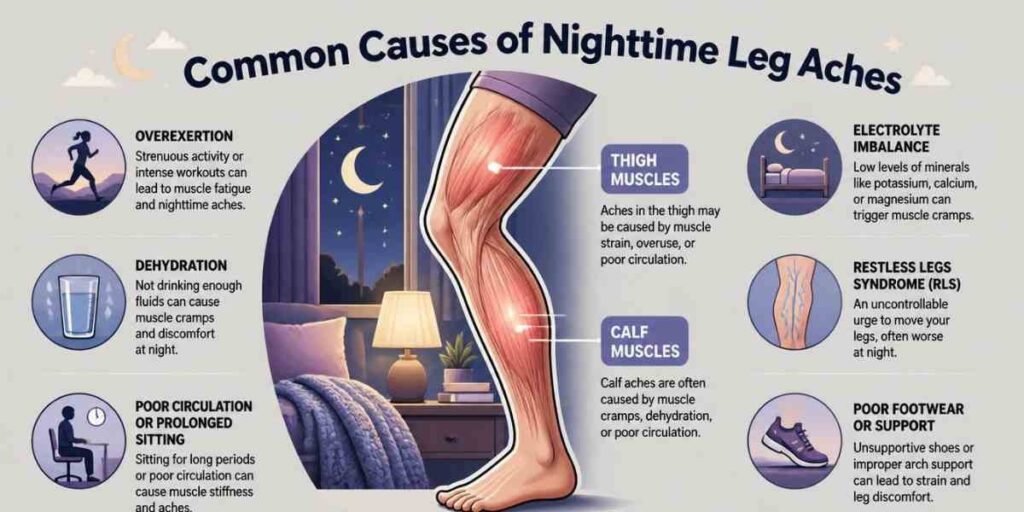
Common Causes of Nighttime Leg Aches
Poor Circulation
When blood flow to your lower legs slows down, muscles and nerves don’t get enough oxygen, which can cause aching, cramping, or a heavy feeling. This tends to worsen at night because circulation naturally decreases during rest.
Poor circulation-related pain sometimes comes with cold feet, skin discoloration, or slow-healing sores signs worth mentioning to a doctor if you notice them.
Restless Legs Syndrome (RLS)
RLS is a neurological condition that causes an uncomfortable, hard-to-describe sensation in the legs often described as tingling, crawling, or aching along with a strong urge to move them.
Symptoms typically worsen in the evening and during rest, and moving or walking usually brings temporary relief. RLS is more common in older adults and during pregnancy.
Nocturnal Leg Cramps
These are sudden, sharp muscle contractions, most often in the calves, that can jolt you awake. Unlike RLS, cramps involve real muscle tightening rather than just an uncomfortable sensation.
Dehydration, low magnesium or potassium levels, muscle fatigue from daytime activity, and certain medications are common triggers.
Nerve Compression (Including Sciatica)
Pressure on nerves in your lower back or hips can send burning, shooting, or aching pain down the leg, especially once you lie down and your spine’s alignment shifts.
A herniated disc or narrowed spinal canal that causes little discomfort while walking can flare up considerably once you’re lying flat.
Peripheral Artery Disease (PAD)
PAD happens when narrowed arteries can’t deliver enough blood to meet your legs’ needs, even at rest. This often causes burning or aching pain in the feet or lower legs at night.
A telltale sign of PAD is pain that improves when you dangle your legs over the side of the bed or stand up because gravity is temporarily helping blood reach your feet again.
Chronic Venous Insufficiency
When leg veins struggle to push blood back to the heart, blood can pool in the lower legs, causing heaviness, aching, or swelling that’s often worse at night, especially after a day of standing or sitting.
Dehydration and Mineral Deficiencies
Low levels of magnesium, potassium, or calcium affect how your muscles and nerves function, making cramps and aching more likely. Dehydration alone can also make muscles more prone to involuntary contractions.
Medication Side Effects
Certain diuretics, statins, and blood pressure medications can affect hydration and muscle function, increasing the likelihood of nighttime leg discomfort as a side effect.
Why Circulation Plays a Key Role
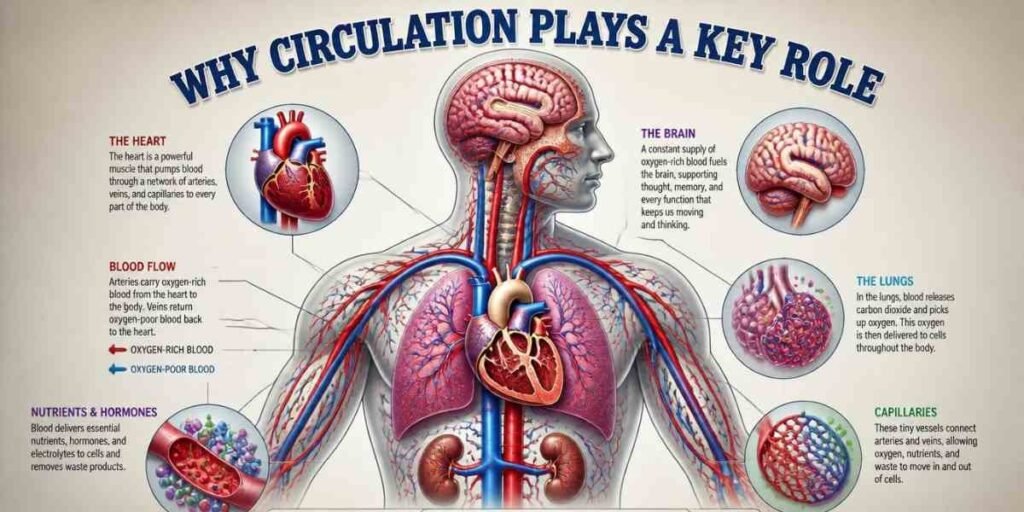
Several of the causes above trace back to the same root issue: circulation. Whether it’s poor arterial flow (PAD), struggling veins (venous insufficiency), or general slowed blood flow at rest, reduced circulation is one of the most common threads in nighttime leg pain.
That’s part of why the same symptom aching legs at night can point to very different underlying issues, from something as simple as dehydration to something that genuinely needs a vascular evaluation.
When to See a Doctor

Occasionally, mild leg aching after a long day is usually nothing to worry about. But certain signs suggest it’s time for a professional evaluation rather than home remedies alone:
- Pain that’s frequent, severe, or getting worse over time
- Swelling, skin discoloration, or visible varicose veins alongside the ache
- Pain that improves specifically when you dangle your legs off the bed or stand up
- Numbness, tingling, or weakness that doesn’t go away
- Non-healing sores or wounds on your legs or feet
- Leg pain accompanied by warmth, redness, or swelling in one leg (which can, in rare cases, signal a blood clot and needs prompt medical attention)
Why do my legs ache at night without exercise? A doctor can run simple tests like an ankle-brachial index test for circulation, or bloodwork for mineral levels to narrow down the actual cause rather than guessing.
Treatment and Prevention Options

For circulation-related aching: Elevating your legs, wearing compression socks, and staying active during the day can all help blood move more efficiently. More significant vascular issues may need a specialist’s evaluation.
For restless legs syndrome: Cutting back on caffeine and alcohol, especially in the evening, along with moderate daily exercise (not too close to bedtime), can ease symptoms for many people.
For nocturnal cramps: Staying hydrated throughout the day, stretching your calves before bed, and addressing any mineral deficiencies through diet or supplements (ideally guided by a doctor) can reduce frequency.
None of these are substitutes for a proper diagnosis if your symptoms are frequent or severe — think of them as reasonable first steps, not a cure-all.
Final Thoughts
Aching legs at night without any exercise to explain it isn’t unusual, and it isn’t always a sign of something serious. Circulation naturally shifts when you rest, which is enough to bring mild issues to the surface that you’d never notice during the day.
Still, patterns matter. Occasional aching after a long day is one thing; frequent, worsening, or one-sided pain with swelling or discoloration is another. When in doubt, a quick conversation with a doctor is a lot easier than living with disrupted sleep night after night.
FAQ SECTION
Why do my legs ache at night if I haven’t exercised?
Nighttime leg aches without exercise are usually caused by circulation changes during rest, restless legs syndrome, nocturnal cramps, nerve compression, or mineral deficiencies rather than muscle strain.
Is it normal for legs to ache every night?
Occasional aching can be normal, but frequent or nightly aching is worth discussing with a doctor, especially if it disrupts your sleep regularly.
What deficiency causes leg aches at night?
Low levels of magnesium, potassium, or calcium are commonly linked to nighttime leg cramps and general muscle aching.